
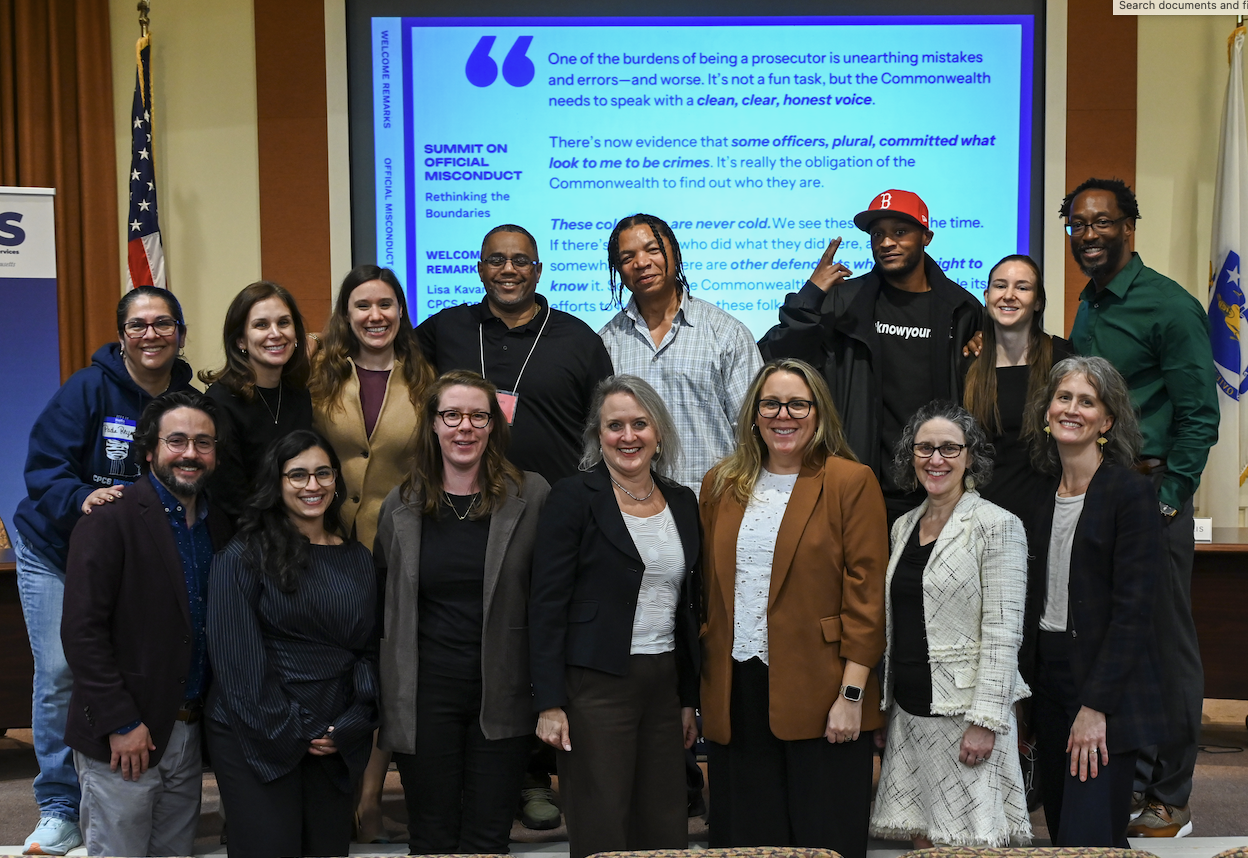
The Committee for Public Counsel Services (CPCS) Innocence Program hosted a Summit on Official Misconduct on October 22-23, 2026, in downtown Boston, bringing together dozens of advocates involved in criminal defense and post-conviction work, including the New England Innocence Project, the Boston College Innocence Program, members of the Exoneree Network, and more, to further the fight against systemic injustice.
The two-day event focused specifically on addressing systemic misconduct, including police and prosecutorial misconduct, a major cause of wrongful convictions, across all stages of the criminal legal process. Participants engaged in facilitated conversations about the factors contributing to unjust outcomes and brainstormed innovative tools and strategies for challenging misconduct committed by police, prosecutors, and others acting on behalf of the state. This was the second Summit of its kind — the first was held in June 2023.
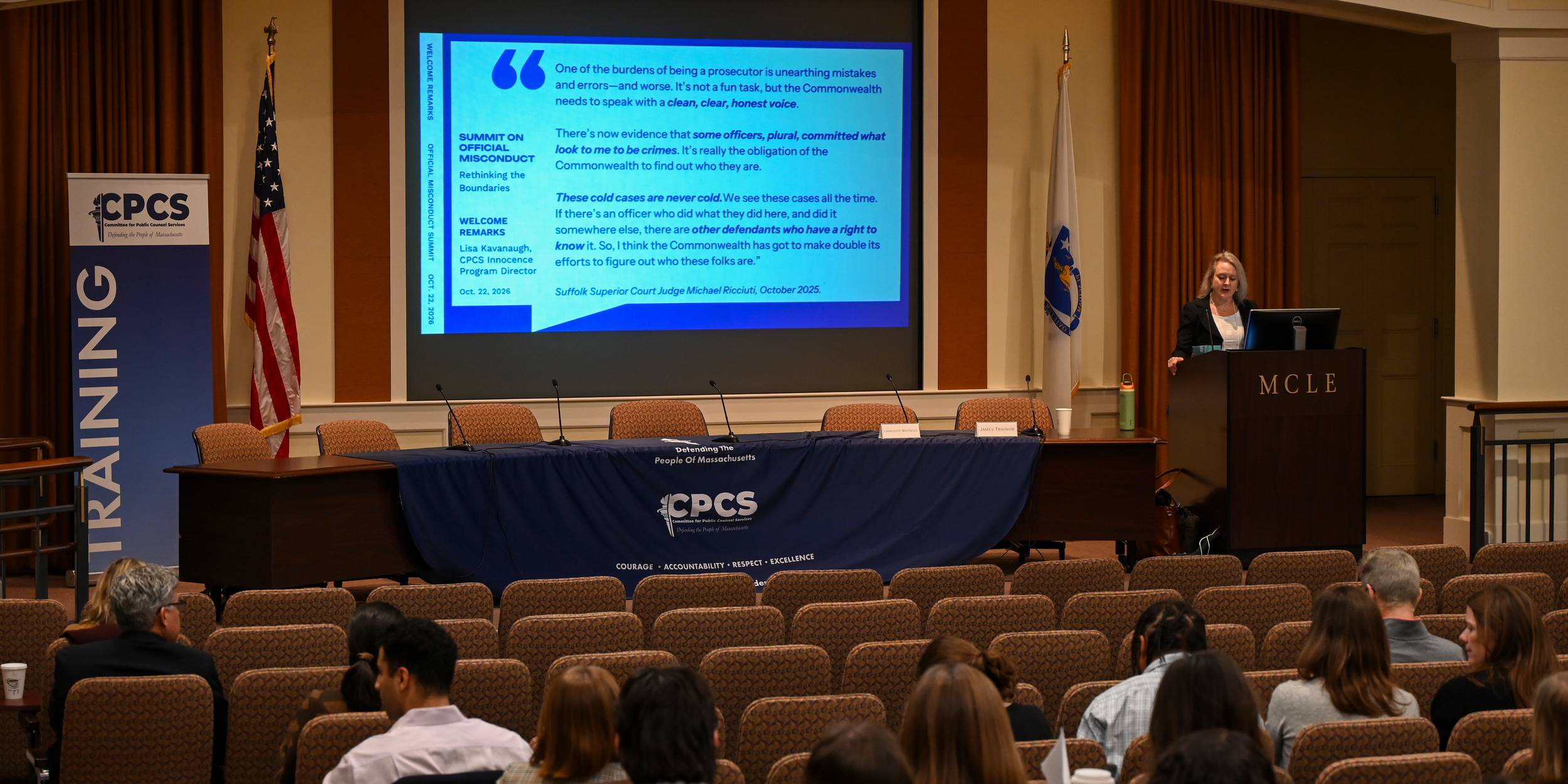
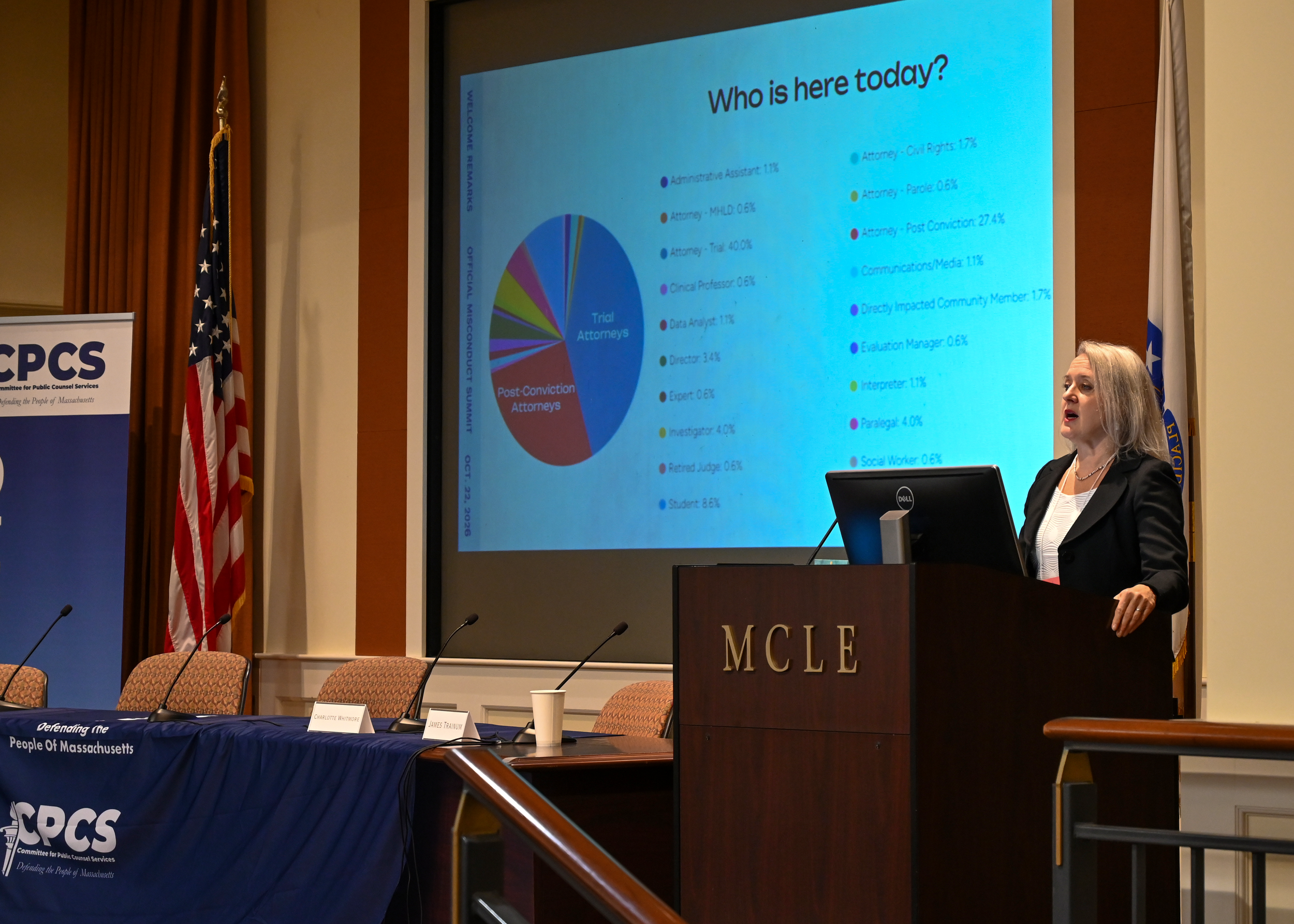
“It’s been more than 360 days since Judge Michael Ricciuti challenged the Commonwealth to do its job at the conclusion of the hearing at which he orally granted FuQuan McGee's Motion for New Trial and nothing has changed,” said Lisa Kavanaugh, Director of the CPCS Innocence Program, in her opening remarks to Summit attendees. She is referring to a case where, at the age of 19, Rickey Fu-Quan McGee was kidnapped by police and charged with the fatal shooting death of a Christy’s store clerk. He spent the next three decades in prison before the misconduct that led to his wrongful conviction finally came to light.
“We can’t wait for the prosecution to do the right thing. We also can’t assume that the way we’ve been fighting is enough,” adds Kavanaugh. “All of us—staff at CPCS, private and public counsel, lawyers and advocates, directly impacted people—need to work together and figure out how to do things differently.”
“One of the burdens of being a prosecutor is unearthing mistakes and errors and worse. It’s not a fun task, but the Commonwealth needs to speak with a clean, clear, honest voice. There’s now evidence that some officers, plural, committed what look to me to be crimes. It’s really the obligation of the Commonwealth to find out who they are. These cold cases are never cold. We see these cases all the time. If there’s an officer who did what they did here, and did it somewhere else, there are other defendants who have a right to know it. So, I think the Commonwealth has got to make double its efforts to figure out who these folks are.”
Photography by Jacquelyn Diaz, CPCS Training Technologist
Summit sessions and speakers included:
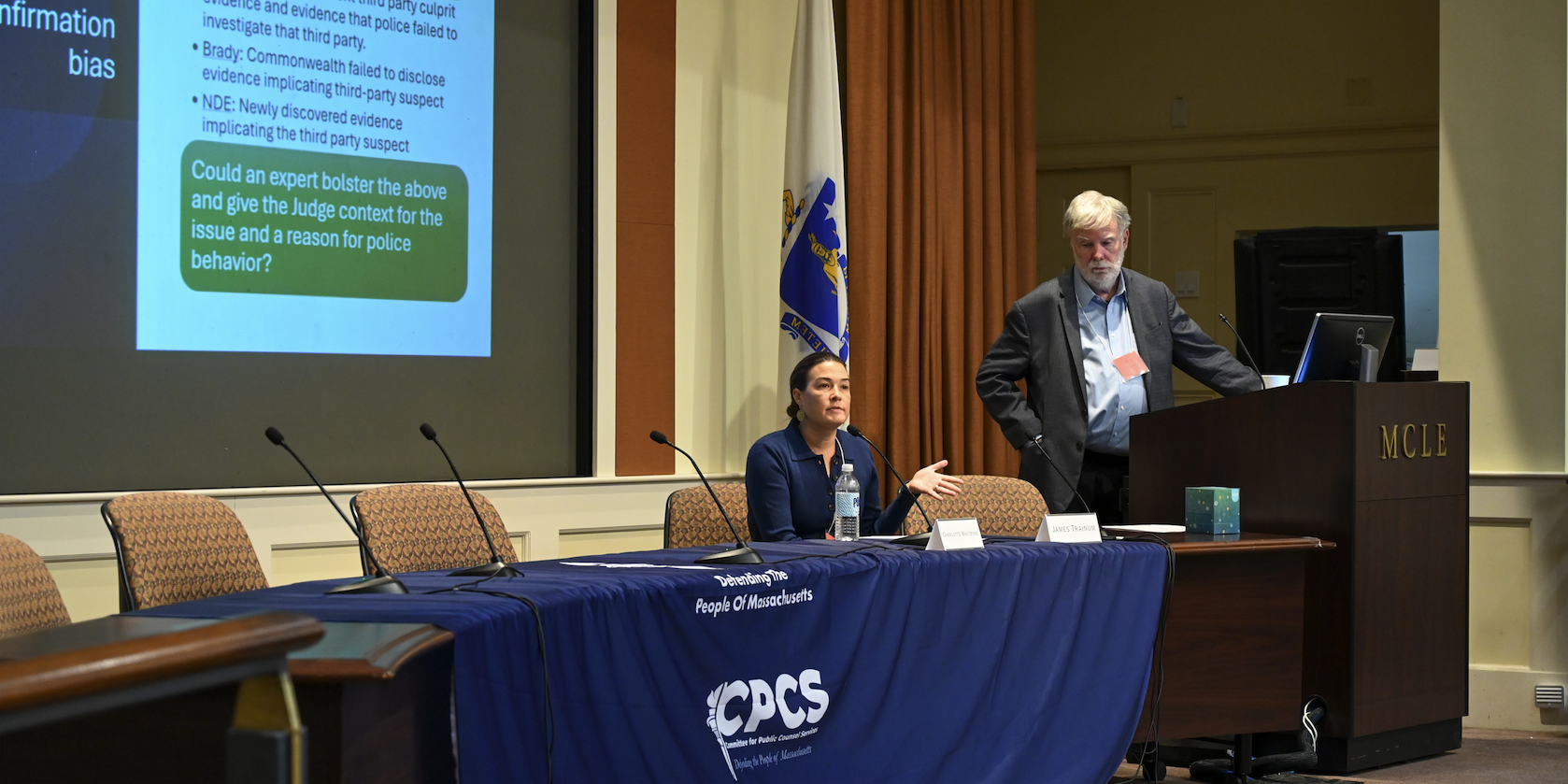
How missed leads and confirmation bias shape (and skew) police work: James Trainum, Private Consultant and Former Homicide Detective, and Charlotte Whitmore, Senior Staff Attorney with the BC Innocence Program
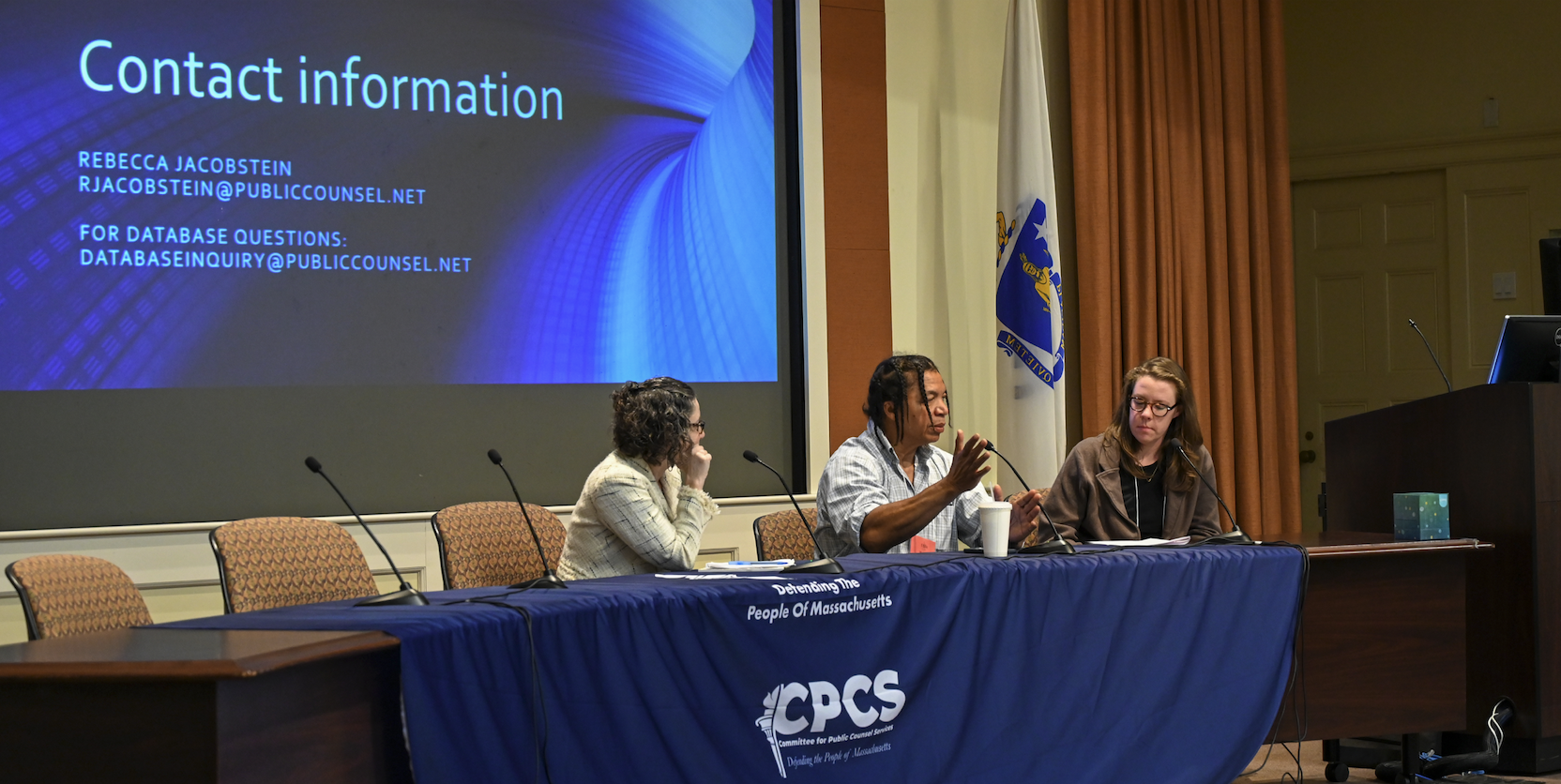
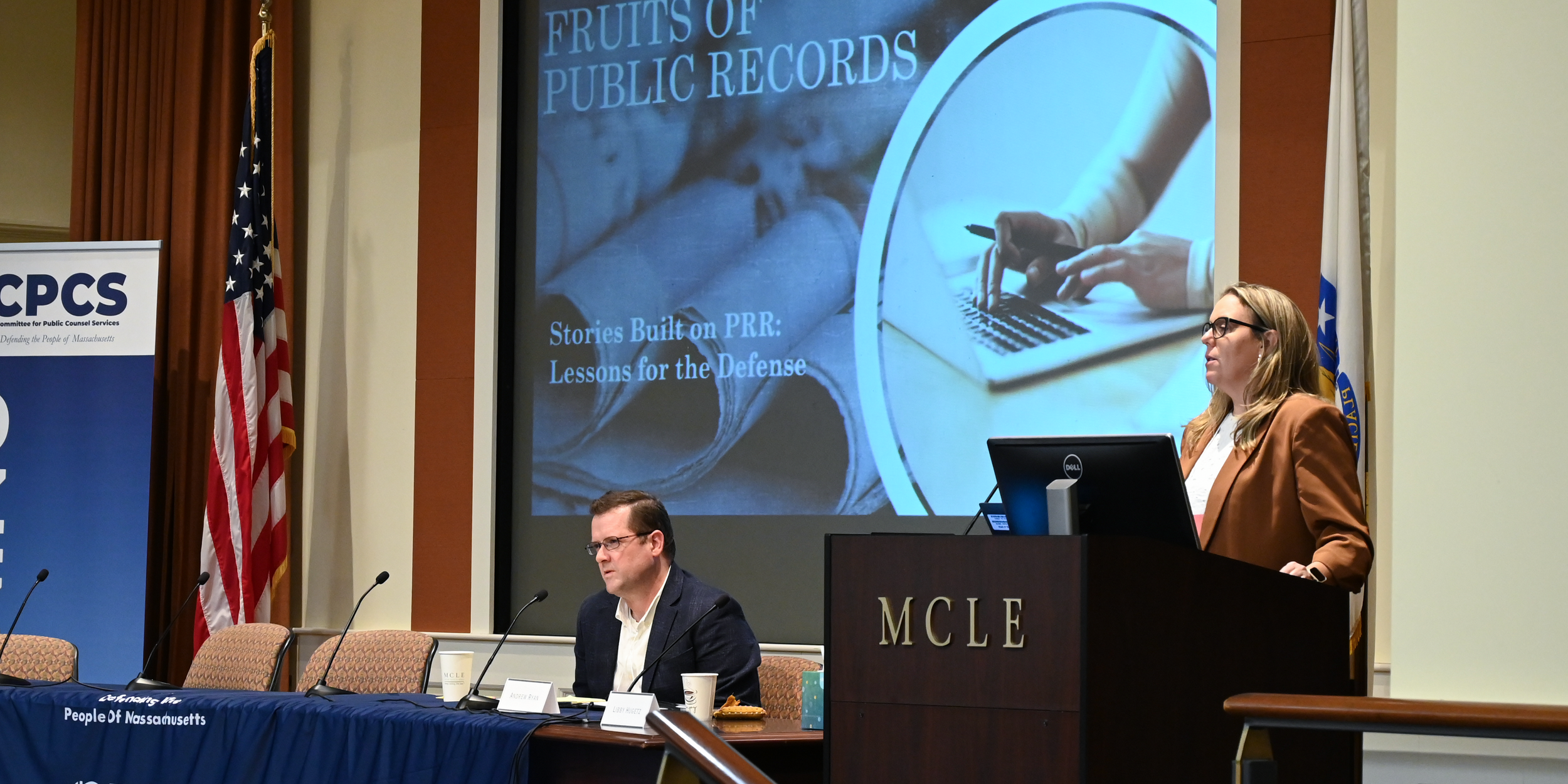
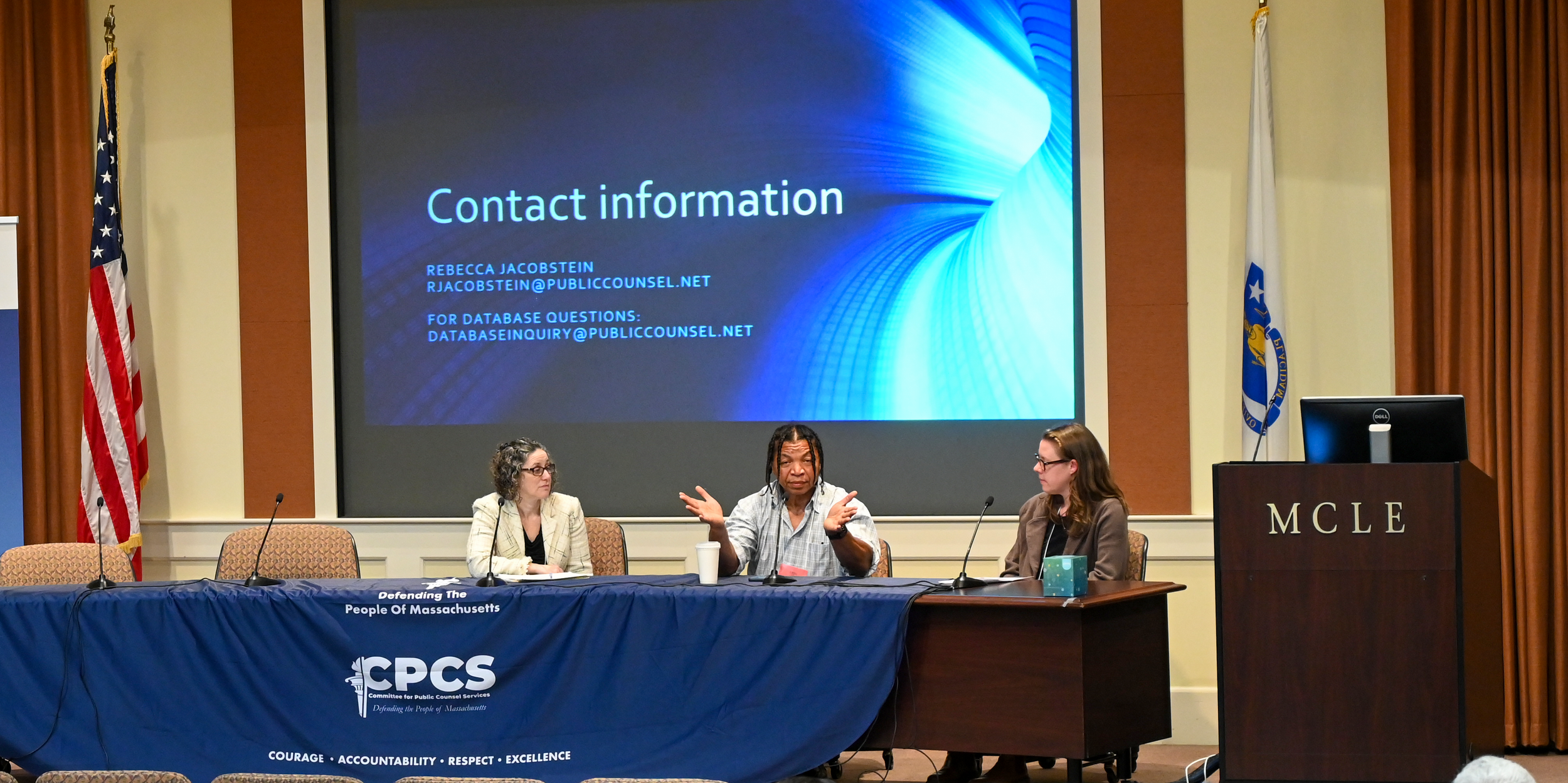
How public records requests can uncover critical, previously unavailable information and how that information can strengthen motions for a new trial: Clare Enright, CPCS Innocence Program Legal Fellow, Rebecca Jacobstein, Director of CPCS Strategic Litigation, and Exoneree Eddie Wright
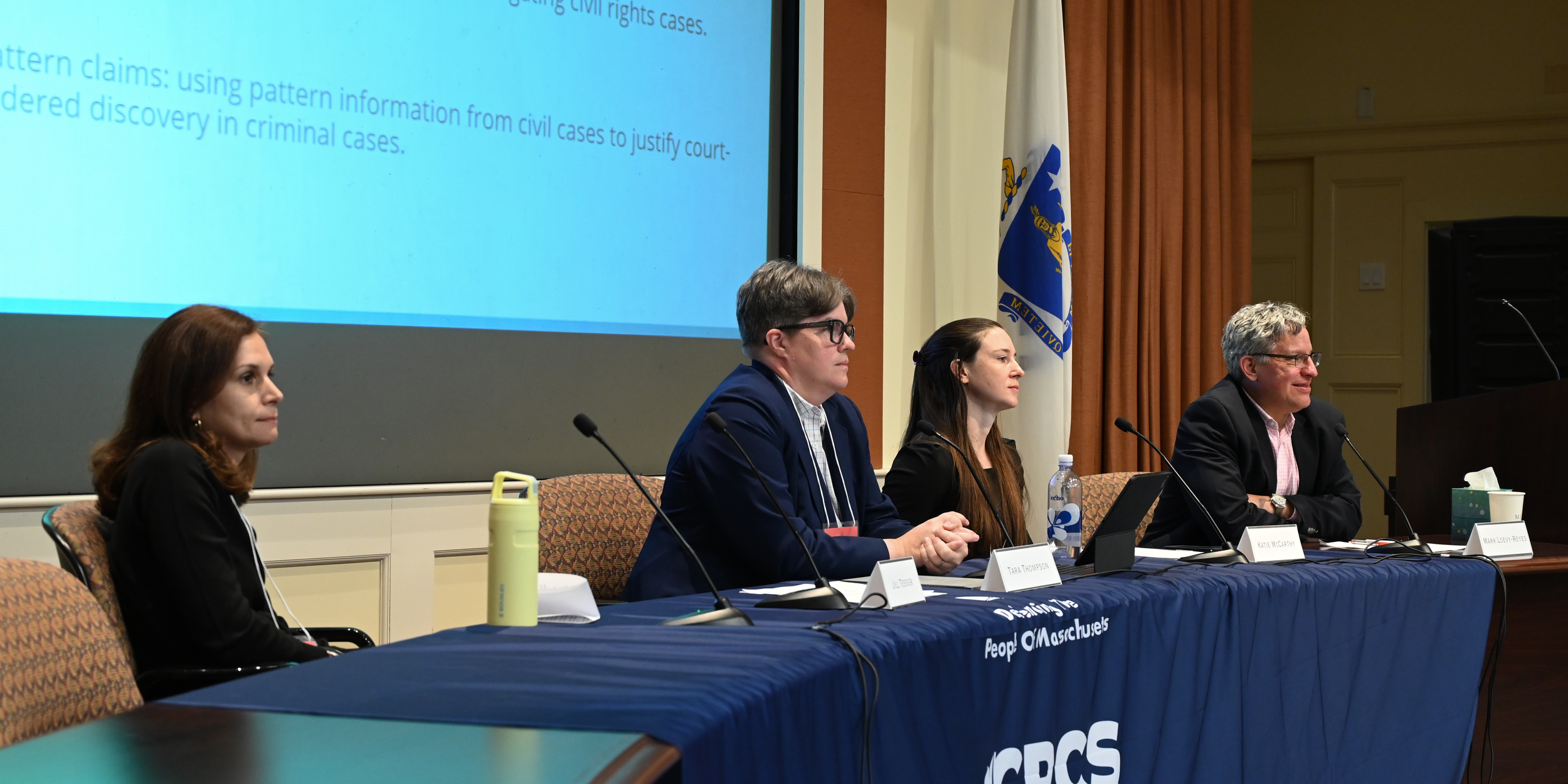
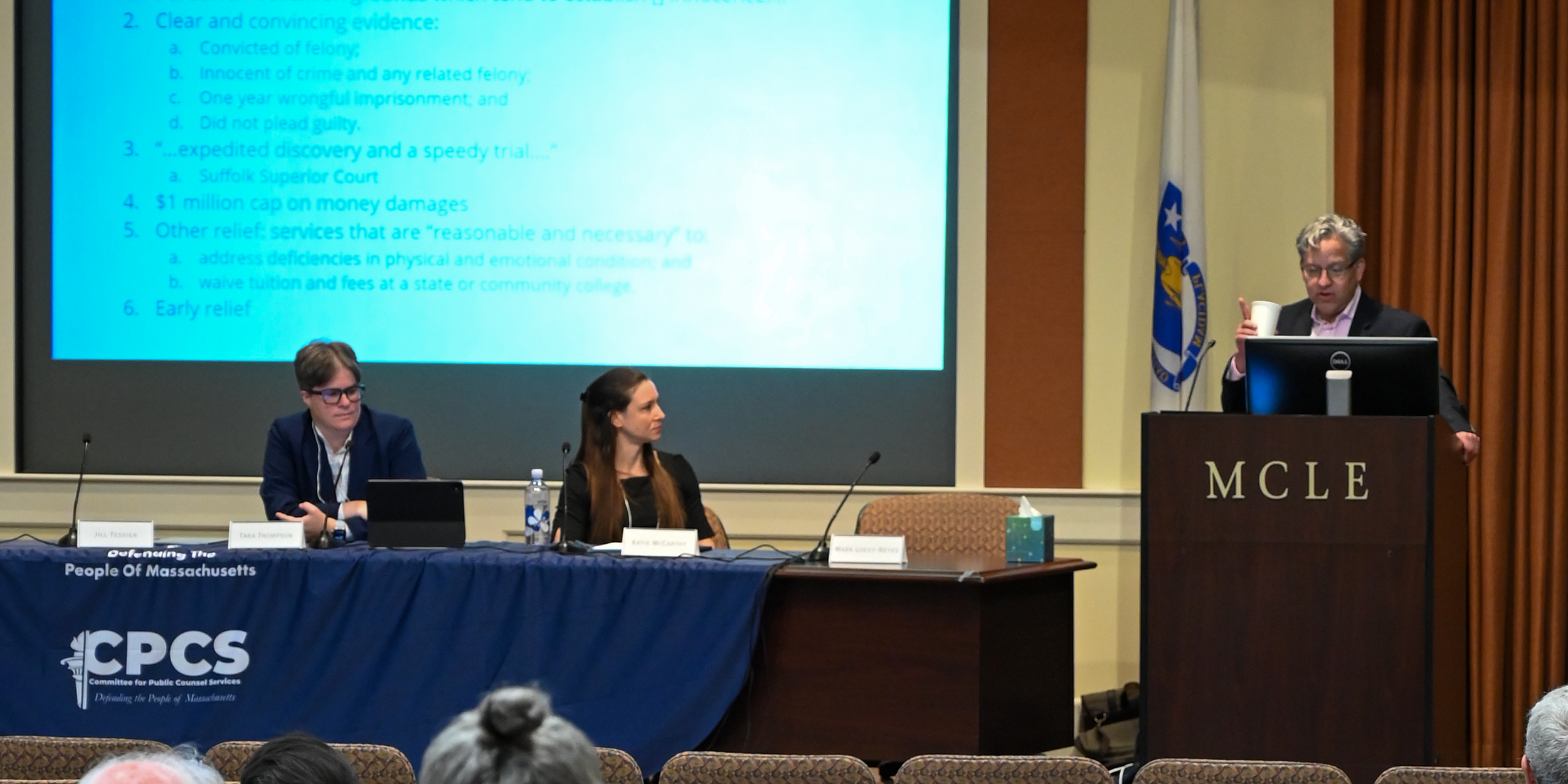
How civil litigation can inform criminal defense advocacy: Mark Loevy-Reyes, Partner, Loevy + Loevy, Katie McCarthy, Counsel, Neufeld Scheck Brustin Hoffmann & Freudenberger LLP, and Tara Thompson, Executive Director of The Exoneration Project
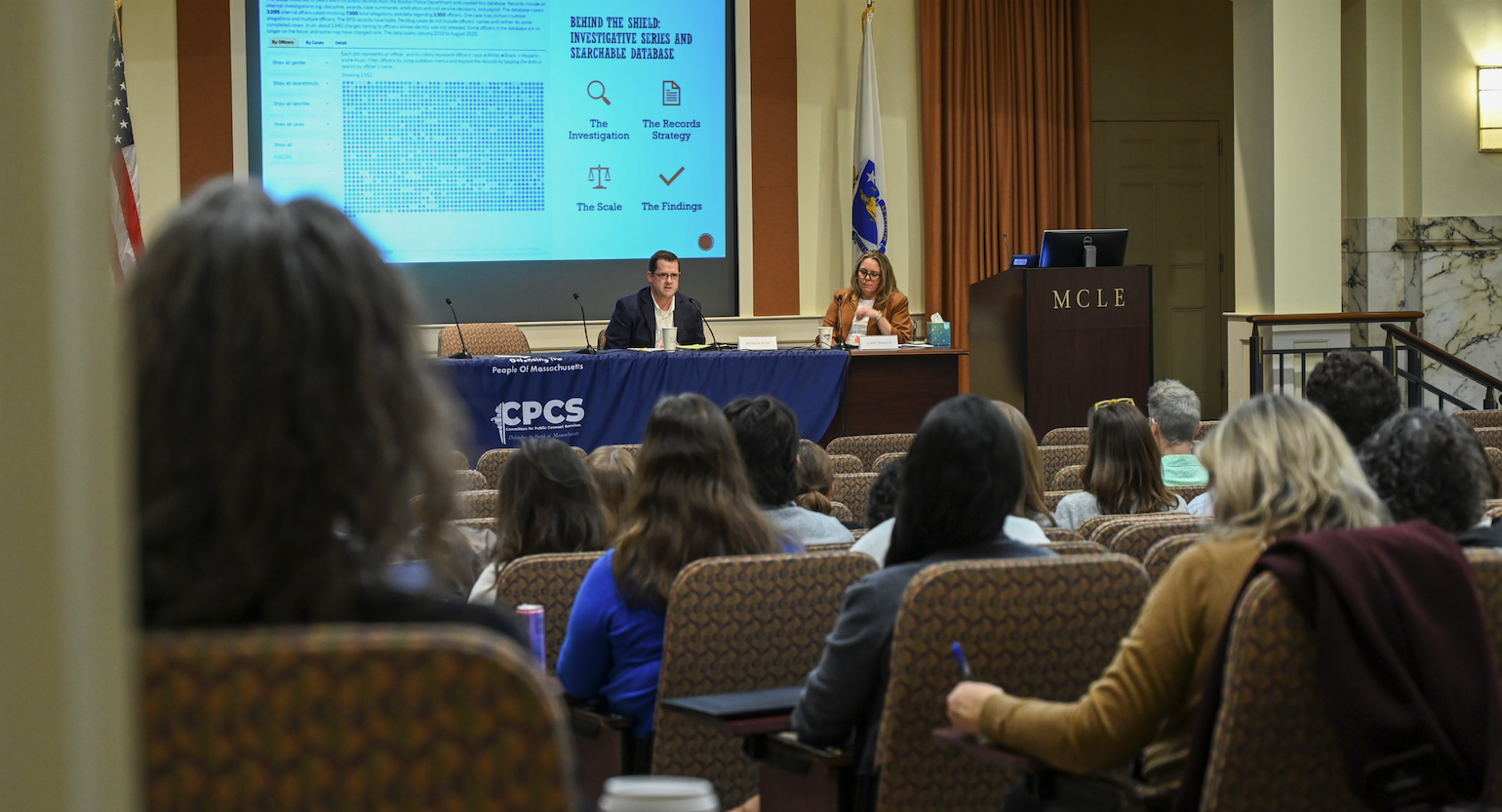
How public records can expose hidden patterns of misconduct and reveal information that traditional discovery misses: The Boston Globe Investigative Reporter Andrew Ryan
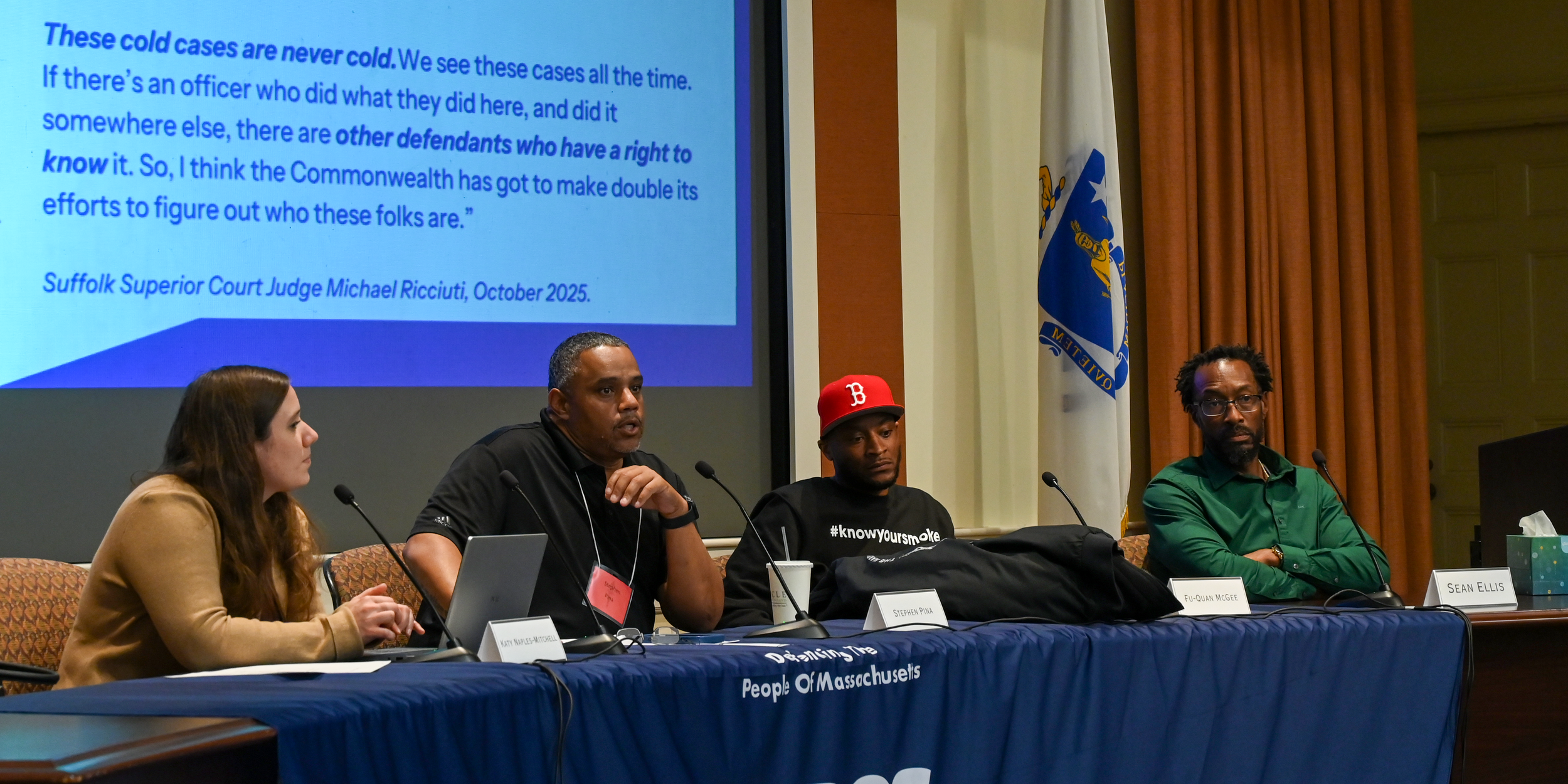
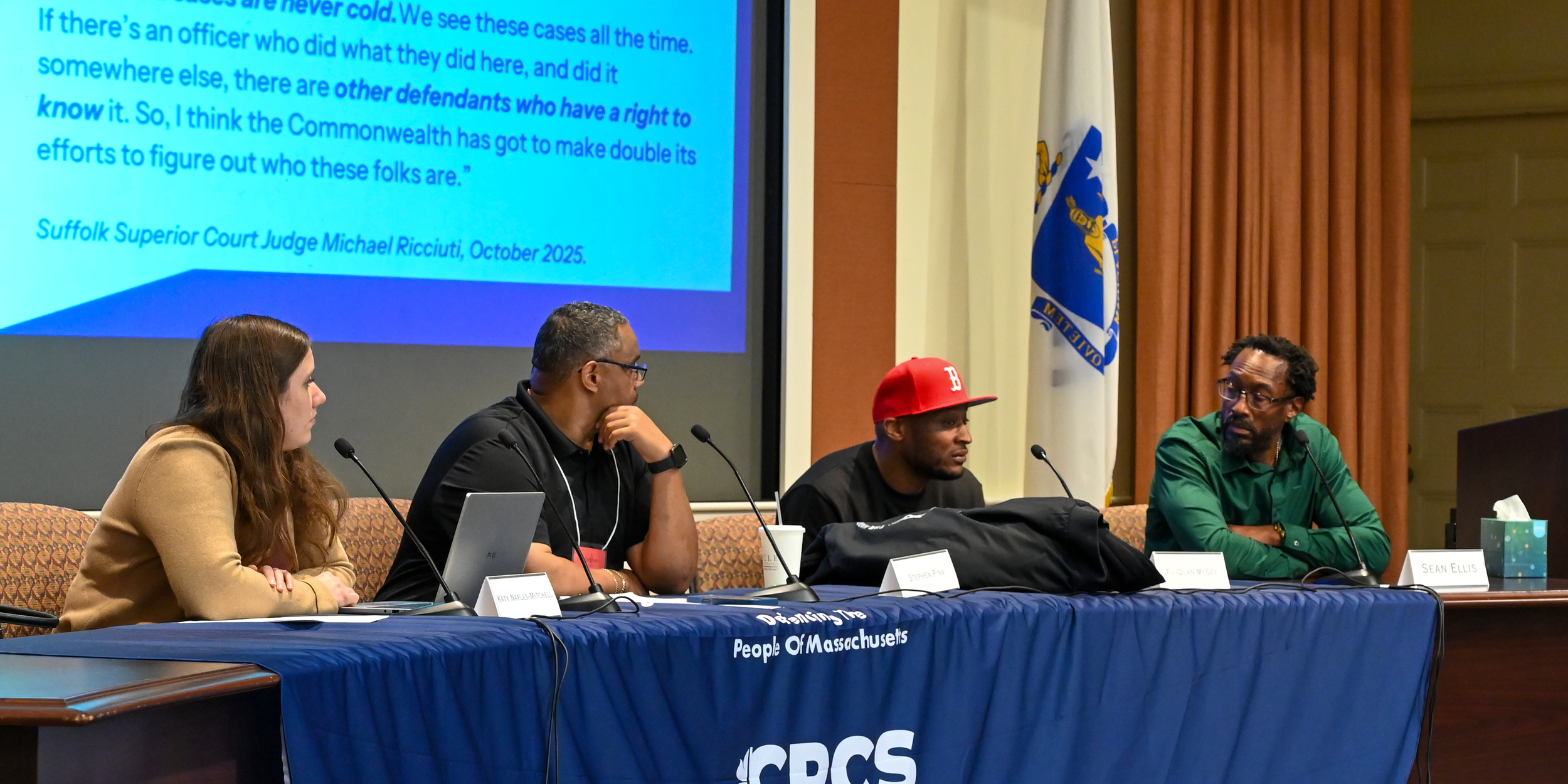
The day wrapped up with a meaningful panel discussion featuring directly impacted community members. Three Massachusetts exonerees: Sean Ellis, Director of Exoneree Network, Fu-Quan McGee, Founder and Facilitator of The Harriet Tubman Project, and Stephen Pina, Exoneree Network Community Engagement Associate—who collectively spent more than 67 years in prison for crimes they did not commit—talked about the role that misconduct played a role in each of their wrongful convictions and prolonged incarcerations.
"The issue of police and prosecutorial misconduct in Massachusetts, particularly in Suffolk County, which is the hub of misconduct, is not linear,” said Sean Ellis. “It’s a very big, complex issue, and I find some comfort in knowing the Defense Bar is devoting so much time and effort to studying how we can challenge it."
“This was an amazing experience,” shared Stephen Pina, who was exonerated in August 2026. “Imagine going from a prison cell to an auditorium and conference room, helping CPCS attorneys better understand the effect of misconduct, and how to better understand and serve their clients.”
We’re hopeful the Summit will lead to increased information sharing and collaboration among participants, and that we can explore the strategies presented in greater depth as we continue our efforts to free innocent people from prison and expose systemic misconduct. Thank you to everyone who participated and attended!