
Our Fight to Reveal Police Misconduct by Current Police Lieutenant
Our lawsuit seeks to access information about false statements made by Brockton Police Detective Matthew Graham in a push for a larger investigation
“We are doing what the prosecutors should have done years ago: Bringing to light all evidence of misconduct in this case so that others who may be impacted are aware and so that there can be an investigation into the true scope of the misconduct.”
On July 6, 2026, we filed a lawsuit in the Plymouth Superior Court to access impounded information regarding false statements made by Officer Matthew Graham, now a Lieutenant with the Brockton Police Department, in order to obtain a search warrant. The New England Innocence Project, represented by Attorney Mitchell Kosht of Thomas Oakley PLLC, filed a civil complaint asking that the documents and hearing testimony revealing details of police misconduct be made available to the public, in an effort to shed light on the scope of official misconduct, one of the leading causes of wrongful convictions in the Commonwealth, and to push for a larger investigation, including revisiting other cases Lieutenant Graham participated in.
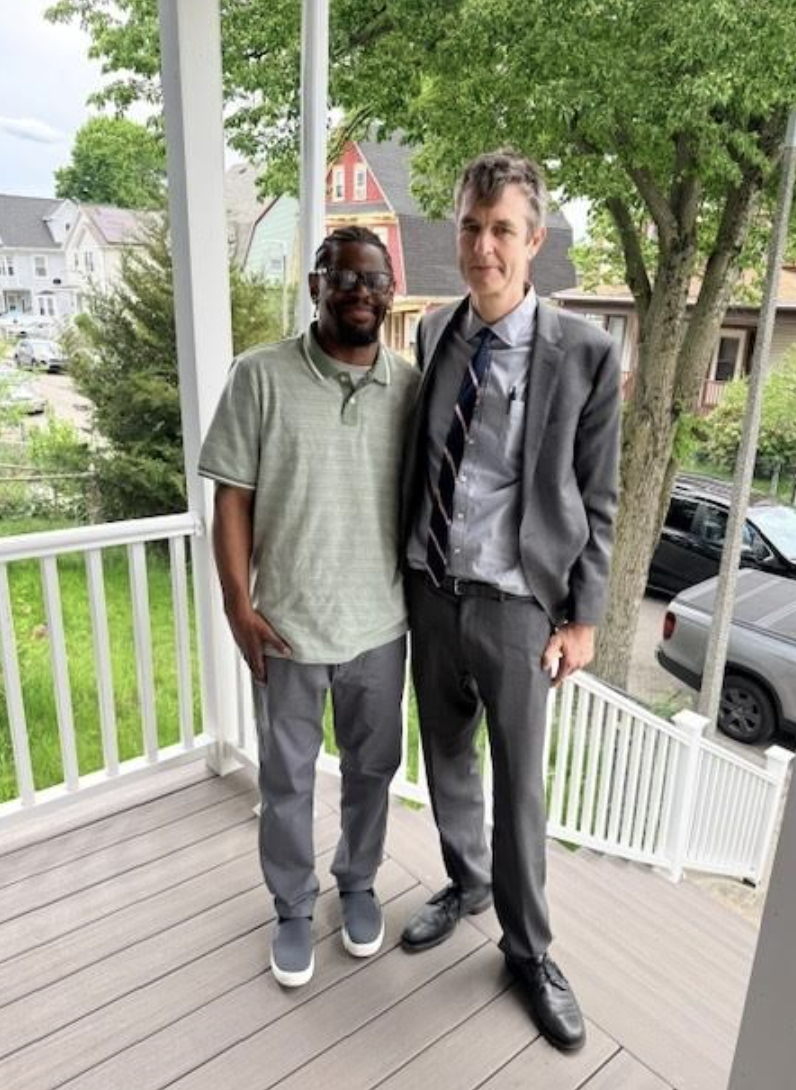
Mr. Mallory (left) with his appellate and post-conviction attorney, Matthew Spurlock of CPCS
The police misconduct occurred in the context of a 2016 criminal case against Allah Mallory. On April 16, 2016, then-Detective Matthew Graham of the Brockton Police Department swore “facts” under oath, some of which were materially untrue, to falsely establish probable cause in order to secure a search warrant. Mr. Mallory was prosecuted and ultimately convicted based on evidence seized during the execution of this improper search warrant at the third-floor apartment of a multifamily building. He would serve ten years in prison before these falsehoods would come to light and his convictions would be overturned.
In his search warrant application, then-Detective Graham swore that there had been three “controlled buys” of heroin by an unnamed confidential informant. Per Brockton Departmental Policy, those buys had to be witnessed by at least two members of the police department. In his search warrant application, Detective Graham swore that the second and third controlled buys were supervised by him and Detective Brian Donahue, and even detailed specific observations made by Detective Donahue during the alleged buys. However, as was discovered much later, Detective Donahue was not working when the third controlled buy allegedly occurred and therefore could not have been present during the investigation. Though Mr. Mallory contested the truth of what was in the search warrant, he was nonetheless convicted at a 2019 jury trial of drug trafficking and firearm offenses and was sentenced to 16-18 years in state prison.
After his conviction, Mr. Mallory and his appellate attorney continued to investigate the case and discovered evidence of the false statements made by then-Detective Graham, bringing that evidence to court to challenge the conviction over three years of new trial litigation. While the veracity of the warrant was being litigated, the Brockton Police Department destroyed the drugs allegedly seized during the three controlled buys that formed the basis of the search warrant, even though Chapter 278A requires preservation of evidence while the person is incarcerated, preventing any testing or scrutiny of their provenance.
The Superior Court judge ultimately found — in an impounded decision that was affirmed by the Massachusetts Appeals Court this year — that Detective Matthew Graham made materially false statements in a warrant application, either knowingly, intentionally, or with reckless disregard for the truth. Mr. Mallory’s convictions were overturned in April 2026 after he had served a decade in prison, and instead of retrying him, the Plymouth District Attorney’s Office decided to end the prosecution by issuing a nolle prosequi.
Despite judicial decisions and an overturned conviction, the details about the police misconduct and false statements in this case, including an evidentiary hearing about them, remain hidden from the public under impoundment orders. The lawsuit seeks “relief from impoundment” and aims to bring to light the misconduct that occurred in Mr. Mallory’s case by a police officer, who remains on the force today, as well as ensure that other defendants whose cases involve/involved Detective Graham (or others who may have participated in the misconduct) obtain information relevant to the integrity of their prosecutions.
“The New England Innocence Project is committed to dismantling the harms of the criminal legal system, including bringing awareness to official misconduct, one of the leading causes of wrongful convictions in the Commonwealth,” said Radha Natarajan, Executive Director of the New England Innocence Project. “We are doing what the prosecutors should have done years ago: Bringing to light all evidence of misconduct in this case so that others who may be impacted are aware and so that there can be an investigation into the true scope of the misconduct.”