Every June, we take a moment to reflect on the progress we’ve made and recommit to the work ahead. Thanks to your support, we’re bringing hope, healing, and freedom to people who have been wrongfully convicted—and building a stronger community for all those impacted. Read our interactive report to learn more.
Read moreExoneree Network Impact Update: June 2024-2025
Empowering Exonerees and Freed People & Their Families
June 2024 - 2025

As this community continues to grow, the Exoneree Network (EN) team had a busy year supporting exonerees and their family members, people freed but still fighting a wrongful conviction, and those coming home after long-term incarceration. We continue to see success as we work toward the goal of ensuring all exonerees and freed people know they are not alone and have access to comprehensive support upon their release. Here are some of our key achievements from the last year:
Mental Wellness
Monthly Healing Circles:
EN hosts a bi-monthly healing circle where we support exonerees and their loved ones in the exploration of self-affirming practices and healing modalities to address ongoing stressors, strained relationships, and prolonged trauma.
Quarterly Support Groups:
EN facilitated three support groups that provided emotional and social support to 20 different exonerees. These quarterly gatherings offer our EN community a chance to come together over a shared meal in a welcoming, communal space in order to connect, reflect, heal, and support one another.
Wellness Retreats:
EN hosted four wellness retreats benefitting members of our community and their significant others. These retreats focus on improving communication skills, strengthening personal relationships, and promoting mental well-being.

Annual Healing Retreat:
EN held its first Annual Healing Retreat—a three-day, two-night experience focused on healing and connection. A group of nearly 30 participants, including exonerees and their support people, and guided by our community partner, Who’s Got Morale, engaged in Indigenous healing practices and explored holistic methods for coping with the trauma of incarceration and adjusting to a new world. The retreat provided a supportive space for reflection, growth, and collective restoration.
Individual Support:
EN has a full-time social worker on staff who can provide individualized support to community members as needed, including referrals to a mental health clinician. Over the past year, the EN staff fielded 63 individual calls or requests for support, ranging from housing and medical needs to technology and mental health support, and more. Ongoing contact with an advocate provides both a strong sense of community and critical support for crisis management.
Community Building
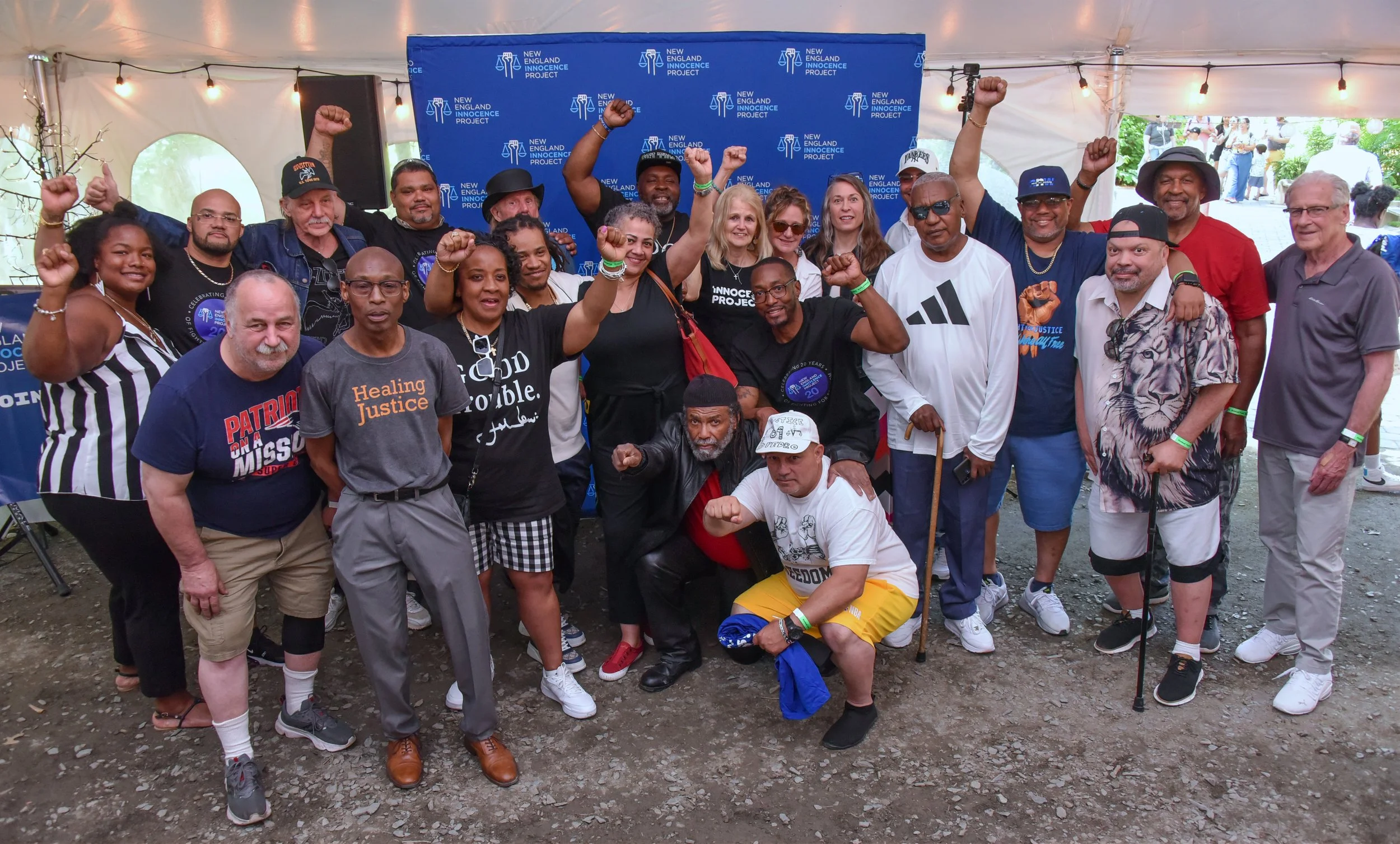
Members of the Exoneree Network community at the 2024 Celebration of Freedom & Community
The Exoneree Network passionately cultivates a thriving community for people who have been wrongfully convicted or suffered the trauma of long-term incarceration and their families. The EN hosted or participated in several community events throughout the year to bring people together, including:
Celebration of Freedom & Community:
The EN hosted the annual Celebration of Freedom & Community last June, a private event for exonerees and freed people and their families to come together, share stories, dance, welcome newly freed members, and celebrate freedom in a safe environment. This year, the event was hosted at Kimball Farm and was attended by 106 people, including 25 exonerees and freed people and their family and friends.
The Innocence Network Conference:
In April 2025, members of the Exoneree Network community joined hundreds of exonerees, freed people, their families, and advocates from across the country at the annual Innocence Network Conference—the largest gathering of its kind in the world. Held this year in Seattle, the conference is more than just an event; it’s a powerful reminder of the strength, joy, and healing power of community. This year, 11 exonerees and freed people from New England attended the conference. Collectively, they lost more than 353 years to wrongful imprisonment.


Wrongful Conviction Day:
Every October 2, the Exoneree Network community comes together in honor of Wrongful Conviction Day for our annual march and rally to raise awareness about the injustice they have suffered. This past October, we hosted an event at the State House where we advocated for much-needed reforms to prevent future tragedies, provide more pathways to freedom, and provide compensation upon release.
Advocacy Efforts:
We invite EN community members and their families to come together to advocate for themselves and for systemic change in various ways, including testifying about their experience in support of key legislation and attending legal hearings to support their peers as they fight their cases in court. Most recently, four exonerees and freed people testified at a judiciary hearing to fight for compensation (Bill H1965/S1132) for the trauma caused by wrongful convictions and decades of incarceration.

Speaking Opportunities & Sharing Stories:
Sharing their stories is essential for the growth and healing of exonerated and freed people as well as their family members. Speaking opportunities also help educate and inform by raising awareness about wrongful convictions, the trauma of long-term incarceration, and the long and difficult journey to rebuild after release. In the last year, as we prepare to launch our EN Speaker’s Bureau, the EN has hosted two group storytelling training sessions attended by exonerees and their support people, and provided a series of individual public speaking training sessions to four exonerees. Several community members have also spoken at schools or universities, as well as to at-risk youth, about their experience being wrongfully convicted.
Financial Empowerment
Seasonal Stipend Program:
The Exoneree Network continued its Seasonal Stipend Program, distributing 118 stipends totaling $59,000 in direct cash assistance to 31 exonerees to provide immediate and on-going financial support to decrease the stress that comes with food, clothing, and housing insecurity while community members rebuild.
Freedom Package:
EN provided 11 freedom packages, including 10 New Day Funds totaling $10,000 to address immediate needs. This included the distribution of 8 cell phones and 11 laptops to help exonerees stay connected and access critical services.
Financial Literacy:
Many members of our community have never had a bank account or a credit card, or do not know how to write a check. Seventy-five percent of EN members didn’t know their credit score or how to find out. In the last year, we’ve offered personalized one-on-one financial coaching to EN members to encourage financial empowerment and independence. In addition, the Exoneree Network offered a financial literacy course that teaches members how to create budgets and understand credit.
Housing Assistance
After decades of incarceration and without compensation from the state, there is a great and immediate need for secure housing for people who have been released after a wrongful conviction.
Rental Assistance:
In the last year, EN allocated $9,038 in rental assistance to help exonerees maintain stable housing and support successful reintegration into the community.
EN Freedom House: In early 2024, the EN launched the Freedom House, a transitional home providing safe and stable housing exclusively for exonerees and those suffering as a result of long-term incarceration. Designed as a supportive, trauma-informed living environment, the Freedom House offers a foundation for healing and reintegration. In the past year, it has housed five exonerees and freed people who collectively spent over 120 years incarcerated, one of whom has gone on to secure long-term housing.
Help Navigating a New World

Tech Training with Deloitte:
Many members of our community have had limited or no access to or training in the digital world. In collaboration with Deloitte, EN organized two technology training sessions attended by 16 exonerees and family members. These sessions enhanced participants’ digital literacy and tech skills.
Job Training Program:
In partnership with Operation Able, the Exoneree Network continues to engage two community members as part-time employees, Stephen Pina and Raymond Gaines. This opportunity provides individuals who have a limited employment history due to years of wrongful incarceration with valuable workplace skills, including workplace communication and culture, public speaking skills, and basic computer literacy, while helping exonerees and freed people build their resumes.
The program has proven to help community members, like Stephen and Raymond, build confidence and gain a deeper understanding of how to navigate professional environments, while also providing participants with a renewed sense of purpose.
Help with IDs, benefits, healthcare, and more:
EN’s Social Service Advocate works to support community members in accessing essential social services and ensuring their rights are protected. Primarily, she assesses the needs of individual community members and connects them with service providers, helping them navigate complex systems such as healthcare, housing, and public assistance programs. In the past year, EN’s social service advocate has helped community members obtain disability benefits, health insurance, access to a primary care physician and a dentist, and obtain a driver’s license or state ID, among other critical services.
None of this work can be done without your support. Would you consider making a gift to the Exoneree Network today?
Fifth Annual Celebration of Freedom & Community


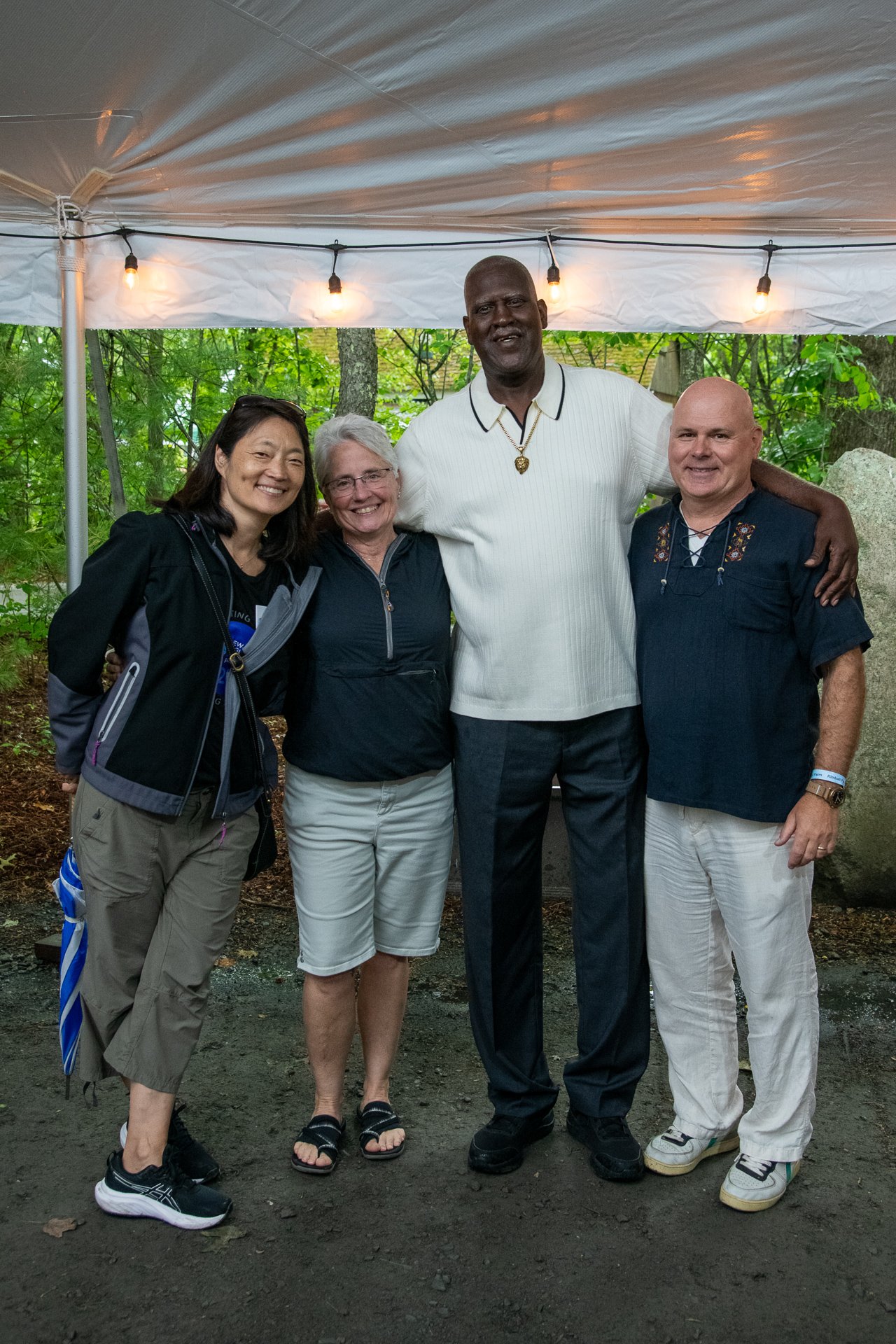
We spent a beautiful day together at our annual Celebration of Freedom & Community at Kimball Farm in June. Although this is a private event for community members, we wanted to share the power of this special gathering with you:
We had 130 attendees, despite the rain, including 20 exonerees and freed people and their family members. Together, they spent 561 years wrongfully incarcerated. We were also joined by several family members representing our community members who are still behind the wall. We laughed, we cried, we danced, we broke bread, and we held space for each other.
As part of the event, each community member was asked an important question: If you could describe the essence of freedom in one word, what would it be? We had many different answers from “hope,” “redemption,” and “fresh air,” to “peace,” “choice,” “independence,” and the word most used to describe the essence of freedom: “Family.”
A Look Back at Our Legislative Efforts
In addition to case work, we advocate for legislative reforms that will reduce the risk of wrongful convictions and unjust sentences, create more pathways to freedom, and provide compensation and support for harms done in our name. We are committed to raising public awareness of the prevalence, causes, and costs of wrongful convictions, including bringing to light the racial disparities that exist within the criminal legal system and that have led to a disproportionate number of people of color who have been wrongfully convicted.
Read moreNEIP “By the Numbers” Snapshot, June 2024 – 2025

Number of cases currently being investigated: 102 active investigations
Many wrongful conviction cases are decades old and require extensive investigation before we can be ready to go to court. Many witnesses are deceased, or evidence has been lost or destroyed, but we leave no stone unturned and continue the fight even in the most challenging circumstances.
Number of states represented in our work: 6 states
We represent people who have been wrongfully convicted of a crime they did not commit throughout the six New England states, including Massachusetts, New Hampshire, Vermont, Maine, Connecticut, and Rhode Island.
Total cases currently in court or soon to be in court: 18 cases
We have 18 cases currently being fought in court or expected to be in court soon. These cases required years of preparation, investigation, testing, research, and resources to be ready for court, and we’re excited that our clients will finally have their voices heard.
Parole hearing support and/or alternative paths to freedom: 8 cases
We fight for people on their journey to freedom through all available legal pathways. This includes providing support at parole hearings and in petitions for clemency, so our community members can come home to their loved ones as quickly as possible and begin the healing process.
Number of amicus briefs submitted: 7 briefs
Our legal team invests in year-round policy efforts that have the potential to effect change for entire communities. Whenever the Court makes a decision in an individual case, it sets a precedent that has the power to change the law for everyone. Over the past year, we’ve seen the significant impact of our amicus work, which allows us to use our knowledge and expertise to assist and advise the Court in these decisions, thereby helping to prevent future tragedies and create more pathways to freedom.
Open applications from people throughout New England: 387 open applications
We receive hundreds of letters and phone calls each year from people requesting help. Although we are unable to assist everyone who writes to us, we aim to review and respond to each and every inquiry. We are currently reviewing more than 387 applications, providing a broad view of the scope of this injustice and the significant need for resources and support so we can help more people across New England who are requesting assistance.
Additional Key Data Points: Growth & Reach, June 2024—2025
We continue to grow and build our community, despite the resistance we face, to bring innocent people home, support those impacted by incarceration, and amplify stories to create systemic change. Some of these additional key data points include:
462 New Supporters: Each and every supporter makes our work possible
4 New Staff Members: Building the infrastructure and capacity to realize our vision of ending wrongful convictions
64 Exonerees and Family Members Received Support: Empowering people impacted by long-term incarceration through the Exoneree Network
Over 45 Speaking Engagements and Events: Raising our voice to educate and advocate for changes to the system

Fighting Wrongful Convictions: The Original Resistance
Dear Friends,
For over 20 years, the New England Innocence Project has been fighting wrongful convictions, knowing that this work is more than just mounting one legal challenge to one case at a time. In a system that prioritizes finality over justice and bias over reliability, our work represents an act of resistance as we advocate for truth, freedom, and safety for us all.
This June, we're setting out to raise $75,000 by month's end, an ambitious goal which reflects the urgency and gravity of our work. With so much at stake, we need your help to get there. Can your act of resistance today be an investment in fighting wrongful convictions? Through June 30, your gift will be matched to double your impact (up to $25,000)!
In recent months, our collective focus has shifted to the national arena, but injustice continues to happen right here in New England. Every day, we confront this unjust system that buries evidence, protects misconduct, and denies the existence of racial bias. And when some of our community members fall victim to the criminal legal system, they also face relentless immigration consequences as a result of their wrongful convictions.
Your investment supports the painstaking, often invisible, work of uncovering the truth and fighting for those the system tried to silence. When you donate to NEIP, you invest in a team of deeply experienced post-conviction attorneys, working with excellent pro bono partners, to investigate, research, and strategize with relentless persistence to overturn a wrongful conviction.
This kind of work is not only time-intensive, but it is costly. DNA testing, expert consultations, complex investigations, and multi-year legal strategy take real financial resources. But every penny is worth it to pursue all possible paths to freedom for our clients, who often have nowhere else to turn for help. Can we count on your investment in your work?
Overturning a wrongful conviction has always been a fight. This is not a fight just for individuals but for the very idea of freedom. In this critical moment, will you donate today and help us reach our goal of raising $75,000 by June 30? Thanks to a generous match donor, your gift will be matched 2-to-1, up to $25,000.
We’re grateful to have you as part of this community.
Sincerely,

Stephanie Hartung
Senior Staff Attorney
New England Innocence Project
P.S. Every dollar you give by June 30 will be matched 2-to-1, up to $25,000. Let’s meet this moment and keep fighting.
Exoneree Network Named Nonprofit Excellence Award Finalist
We are thrilled to share that the Exoneree Network has been named as one of this year’s Nonprofit Excellence Award finalists in the "Community Building" category by the Massachusetts Nonprofit Network. The Awards honor the most innovative and creative work being done by nonprofit organizations across the state. We’re so grateful for the opportunity to highlight the impact of our work and the importance of resources and community building for people returning home after a wrongful conviction and long-term incarceration, and their families.
Court Overturns 1985 Springfield Murder Conviction
Edward Wright’s conviction has been overturned! Mr. Wright has been wrongfully incarcerated for more than 40 years for a murder he did not commit. Judge Jeremy Bucci granted Mr. Wright’s Motion for New Trial based on evidence of official misconduct, including withholding of exculpatory evidence and false testimony at Mr. Wright’s trial.
Read moreJoin us at Voices of the Innocent, Sept. 10

Join us at Voices of the Innocent, the New England Innocence Project’s signature storytelling event and fundraiser, on Sept. 10, where your support can make these dreams of a better future for our community possible. Live and in person, hear personal stories from people directly impacted by wrongful convictions and learn what it takes to persevere in the fight for freedom.
Read moreBuilding Community, Honoring Resilience
In April, 11 exonerees and freed people from New England—who together lost more than 353 years to wrongful imprisonment—gathered in Seattle for the annual Innocence Network Conference for connection, joy, and healing.
Read moreCase update: Our fight for Jason Carroll
It’s taken many years to find and test evidence in Jason Carroll’s case, and we finally have the preliminary results from DNA testing. There’s more work to be done to identify a person from the evidence, but we're grateful there’s a path forward and the possibility of finding the truth.
Read moreAmicus Year in Review: Impact and Continued Efforts
Whenever the Court makes a decision in an individual case, it has the power to change the law for everyone. Engaging in amicus work allows us to use our knowledge and expertise to help shape these decisions, helping to prevent future tragedies and create more freedom.
Read moreInterrogation Bill Reintroduced in Effort to Fight Wrongful Convictions
An Act Preventing False Confessions would make Massachusetts a national leader in banning deceptive tactics during interrogations.
Read moreNew DNA Testing Demonstrates Man Was Wrongfully Convicted of 1984 Murder
Learn more about Edward Wright’s Motion for New Trial in Hampden County Superior Court in Springfield, MA, including the latest update regarding his evidentiary hearing.
Read moreRemembering Sam Sommers
Remembering Sam Sommers, Whose Research on Race Supported the Fight for Freedom
for Wrongfully Convicted People

Dr. Sam Sommers lent his expertise to support the wrongfully convicted
Overturning even one wrongful conviction requires an enormous effort; it takes a team and a community. At the New England Innocence Project (NEIP), our legal efforts rely on collaborations with pro bono attorneys, investigators, forensic analysts, and social scientists, among others. This week, NEIP mourns the loss of Dr. Sam Sommers, a psychology professor and director of the Racial Diversity and Equity Lab at Tufts University, who lent his expertise to support the wrongfully convicted–including our client, Edward Wright–and bring them home to their families.
Sam was an experimental social psychologist whose research focused on race, social perception and judgment, and the psychology of intergroup relations and racial bias. Over the course of his career, he shared his expertise on the impact of race in the criminal legal system, including exposing its staggering racial disparities. He was generous with his time and supported NEIP clients who had been misidentified by a cross-racial eyewitness identification or who were convicted based on racial stereotypes at trial or during jury deliberations.
Sam’s focus on race was essential to our work and to understanding the stories of our clients. Based on National Registry of Exonerations data, Black people are far more likely to be convicted of crimes they did not commit than white people. For example, innocent Black people are seven times more likely to be wrongfully convicted of murder than white people. And although Black people make up less than 14% of the U.S. population, they account for nearly half of all exonerations.
Sam’s most recent collaboration with NEIP involved a careful examination of the role of race in Edward Wright’s wrongful conviction out of Springfield, Massachusetts in 1985. Eddie, a Black man, was tried before an overwhelmingly white jury after the prosecutor challenged every potential Black male juror in the courtroom before the trial began. Eddie was prosecuted for the murder of a white woman, who was his friend, and the prosecutor repeatedly and gratuitously emphasized the victim’s race and used racialized language in questioning witnesses and addressing the jury. Eddie was also seated away from his attorney for the duration of the trial. In an expert report that was submitted to the court in support of Eddie’s Motion for New Trial, Dr. Sommers concluded that “the staging of the trial, including where Mr. Wright was seated, would have risked activating longstanding stereotypes of Black men and danger.” Our fight to overturn Eddie’s wrongful conviction is ongoing as we await a decision on his Motion for New Trial, and we are saddened that Sam cannot be here to see the impact of his contributions.
Sam’s commitment to racial justice was unwavering. We are forever grateful for his invaluable assistance–in Eddie’s case and so many others. His voice, wisdom, and expertise will be sorely missed, but his legacy lives on in the families he helped reunite and the ongoing fight for freedom.
Save the Dates: Freedom Fall
Join us for our 2025 "Freedom Fall" events where we can amplify stories, raise our voices against injustice, hold space for pain and healing, and unite in our collective power.
Read moreThank you to The Boston Foundation for Safety Net Grant
We are honored and deeply grateful to be among the 77 organizations selected for a Safety Net Grant by The Boston Foundation to support our Exoneree Network, a program led by and for individuals directly impacted by wrongful convictions and long-term incarceration.
Read moreOur Commitment to Liberation & Collective Action
In this moment of radical change, we remain steadfast in our commitment to fighting injustice. That is what we focus on every day no matter who is in power or the resistance we face.
Read moreAdvocacy Update: Expanding the Time to Petition for a New Trial in N.H.
We believe that if someone is innocent and in prison, they should be able to go to the Court when there is new evidence about their case. Right now, in New Hampshire, wrongfully convicted people only have three years to go back to the Court, and that leaves innocent people languishing in prison.
Earlier this month, we testified in New Hampshire in support of SB141, a bill that would expand the time for an innocent person to petition for a new trial where they've uncovered new evidence or new forensic evidence, key tools that can prove someone's innocence. You can view an excerpt from this testimony below.
"This [three-year] timeline is virtually impossible to meet in wrongful conviction cases. In 2016, the National Registry for Exonerations reported that an average exoneration took 11 years, almost three times the New Hampshire limit. Wrongful conviction work is slow for many reasons…the three-year limitation period is preventing viable claims of innocence from coming to light.
With the proposed changes to this statute, New Hampshire can bring itself in line with the rest of the country and with scientific understanding. There is no value in a wrongful conviction based on false or misleading evidence. This bill would offer a meaningful pathway to correct these wrongful convictions in New Hampshire."
— Cynthia Mousseau, N.H. Staff Attorney, New England Innocence Project
There are many more steps in the legislative process, but if it passes, it could significantly impact members of our community who are wrongfully incarcerated in New Hampshire.
Thomas Rosa, Jr. Faces Possible Fourth Trial
In September of 2023, Suffolk Superior Court Judge Michael Ricciuti vacated the conviction of Thomas Rosa, Jr. who was wrongfully incarcerated for 34 years for a murder that he did not commit. At this time, Mr. Rosa still faces the prospect of a fourth murder trial. We hope Mr. Rosa’s story of injustice will help amplify the difficulties -- and resistance -- we face fighting wrongful convictions.
Read more