
Supporting Our Community in the Year Ahead
A Conversation with Shar’Day Taylor
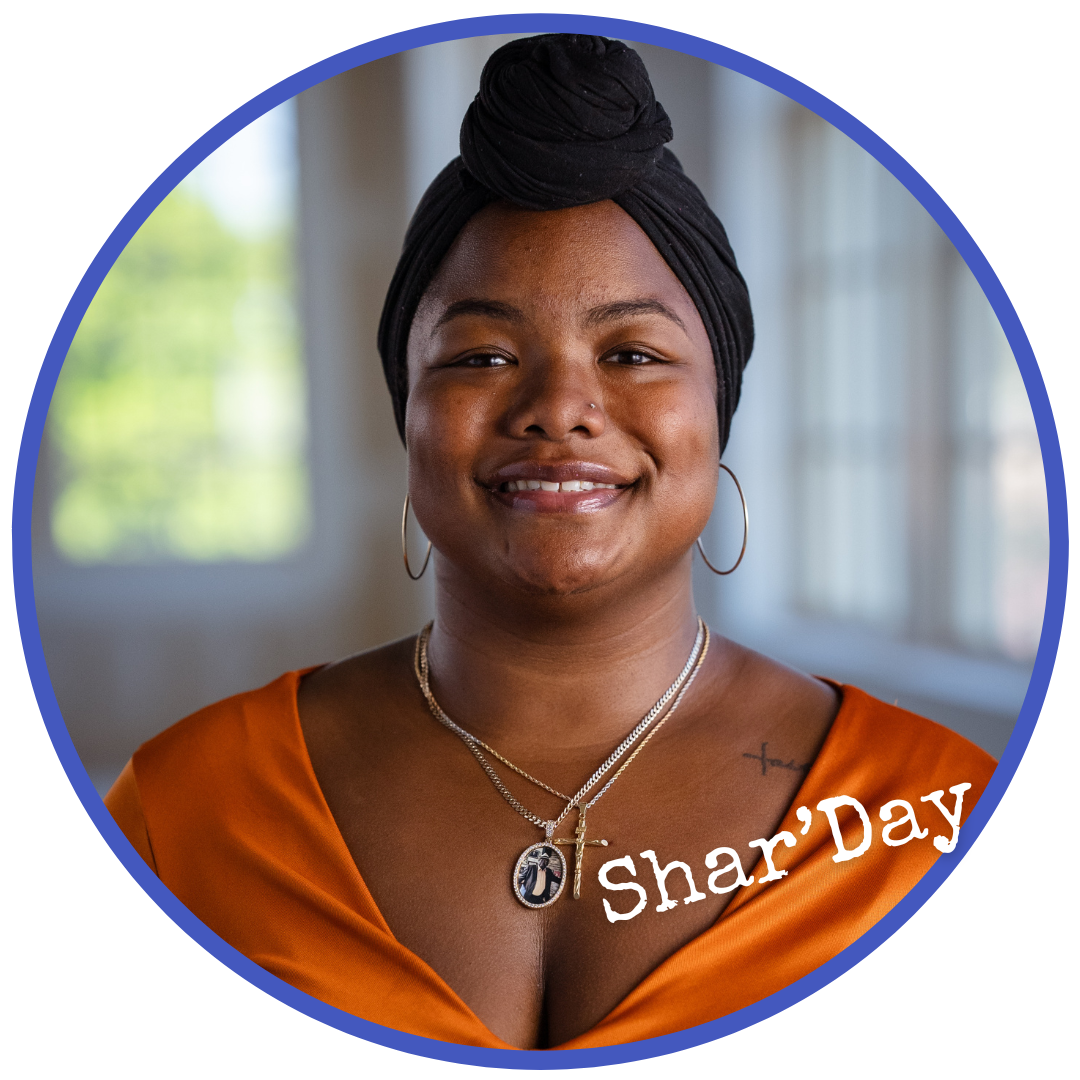
“Community, consistency, and care–that’s what makes this work possible.”
— Shar’Day Taylor, Exoneree Network Social Service Advocate
We recently spoke with Exoneree Network Social Service Advocate Shar’Day Taylor, a licensed social worker who has been providing skilled, hands-on support to our community for nearly 3 years. In her role, she draws on her extensive lived experiences as a younger sister to Sean Ellis, an exoneree who was wrongfully incarcerated for 22 years.
As we enter a new year, what are you most looking forward to for the Exoneree Network?
I’m really looking forward to restarting family “support circles” for our community. We want to amplify the voices of support people and loved ones of exonerees, and make sure they have a space for healing and understanding, and an opportunity to build community and network.
When you say “support people,” who does that include?
We intentionally keep the definition broad. A support person could be a spouse, partner, sibling, parent, or friend–really anyone identified by the exoneree as a source of support.
How did the idea for these support circles come about?
At the Exoneree Network, we’re always asking, “What does our community need?”
When my brother Sean first came home, there was a need to connect and understand in ways that we didn’t even know. We had to learn the hard way what true communication looked like. Now that we have that understanding as a family, we want to make sure our community members have the support they need to navigate these relationships.
What are some of the challenges that support people face?
There are many, and they vary depending on the situation. If an exoneree has access to community resources or a social service advocate like myself, that gives them an advantage.
But for those who don’t, the responsibility often falls on the support person. That can include connecting their loved one to medical appointments and mental health support, and even providing financial support. If someone comes home without stable housing, they may end up living with their support person, which can add an additional burden, especially if the release happens suddenly.
And then there’s the communication barrier. When we see our loved ones behind the wall, it’s for a brief moment in time–we’re both presenting the best version of ourselves. Then we leave, and they go back behind the wall. They’re experiencing life in a way that we can’t imagine, and we’re experiencing life in a way that they can’t imagine. Being able to talk through all of that post-release and come to a deeper understanding of who each of us has become is so important. But it’s not easy, and it takes time.
What other programs are you excited about this year?
We have a lot of great things happening this year! We’re continuing our work with the [5-bedroom] “Freedom” house, which makes housing available to our members without any barriers in their way and gives them an opportunity to get on their feet.
We’re also excited to explore healing the mind, body, and soul–specifically through nontraditional ways like art, cooking, and role-playing. We’re still working out the details, but the response from our community so far has been really positive.
What is the community excited about?
We just really appreciate when we can be together in community—no strenuous agenda or heavy lifting, just an opportunity to laugh, enjoy life, and be present with one another. It's always a great time when we can do that.
We also have the Innocence Network conference coming up this spring in Chicago and the Kimball Farms event in June. A lot of people came home in the past year, so those are places we’ll be able to celebrate them and their families, and the hard work of our community. We’re always striving to find new ways to empower one another and bring ourselves to new heights.
You’re now entering your fourth year in this role. What has this work meant to you personally?
One of the greatest gifts of this role has been the opportunity to focus on my own healing and my family’s healing, and use our life experiences to help others heal. I’m incredibly proud of the creation of the “Freedom” house and being able to go back behind the wall at MCI-Norfolk to meet people my brother spent years with—people who helped shape the man he is today.
Every time we get to celebrate someone coming home is a blessing for me. I’ve been there to see so many people’s first experiences—Eddie Wright, Barry Kumara, FuQuan McGee. These are people I now consider family.
Can you walk us through what your role is when someone is released?
It varies. Sometimes I begin working with someone while they’re still incarcerated, creating their release plan alongside their attorney. Other times, my involvement begins on the day of their release.
Either way, I try to be there at court. It looks like a celebration from the outside, but I’m there trying to create space and make room for families to be together and feel all the things that they feel without becoming overwhelmed–that may mean keeping reporters at bay, or talking to family members or friends about the emotions their loved one may be going through.
The first day or two, there's a lot of noise–there could be press, and an overwhelming amount of phone calls and familiar or unfamiliar faces. Once all of that noise quiets down, and you get your first opportunity to breathe, that moment can feel so overwhelming. I make sure that people know that I'm here if they need to talk, as someone with lived experience who will simply listen and let you know that you’re not alone. I’ll remind you that you're safe, you're okay.
What’s the role of the Exoneree Network upon reentry?
We provide everyone who comes home and qualifies for services with “new day funds.” Not only are they met with love and open arms, but this also means they get some financial assistance. They get money in their own pockets, which hopefully provides some relief for them and their loved ones. We also make sure they have phones and laptops, and some instruction on how to use them.
Then there’s the ongoing support to make sure all of the essentials are taken care of–getting their vital documents, scheduling doctors' appointments, connecting them to mental health services, if desired, and making sure they’re all set for housing, food, and clothing.
Is there any advice that you give to people coming home that they find particularly helpful?
Yes. One thing that I recommend is for people to write everything down. We give every member a notebook and encourage them to record their “firsts.”
For example, the first time someone in our community got on an elevator was a big moment for them. There’s the first time going into the grocery store with so many options, the first time using a debit card or a gift card instead of actual money, the first time seeing a child of a child. Writing these things down helps them reflect on these moments and recognize their own resilience.
Any final thoughts you’d like to share?
Just that we’re here–no matter the time of day, no matter if it’s a holiday, the Exoneree Network is here for our people.